Introducing the Baecher DFN Wizard: Bridging Field Data and 3D Rock Mass Characterization in DIPS
- Yalin Dogan, Geotechnical Product Manager at Rocscience
- Beverly Yang, Geomechanics Specialist at Rocscience
Rocscience is thrilled to announce the Baecher DFN Wizard in DIPS 9.004, a comprehensive 3D discrete fracture network (DFN) modelling tool that integrates advanced stochastic analysis capabilities into DIPS. This feature enables engineers and geologists to generate, visualize, and export DFNs using discontinuity set statistics already available in their DIPS files.
Understanding Discrete Fracture Networks
In rock engineering, complete knowledge of every fracture in a rock mass is rarely, if ever, available. Engineers and geologists typically work with limited data from a handful of boreholes, scanlines, or outcrop exposures, which introduces significant uncertainty about the true nature of the rock mass. Field investigations, hence, capture only a fraction of the fracture population.
DFNs address this challenge by using statistical distributions derived from field observations to stochastically generate fractures. Critically, they allow engineers to generate multiple realizations of the fracture network, enabling a probabilistic analysis of the rock mass rather than a deterministic analysis.
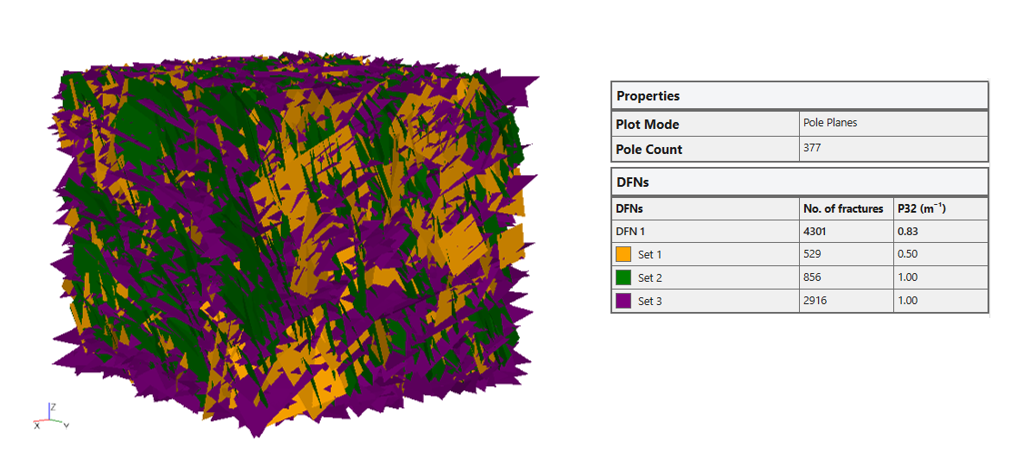
The Baecher DFN Wizard in DIPS allows engineers and geologists to leverage existing discontinuity set statistics from their DIPS file to generate a DFN and visualize it in the new Rock Mass View. This seamless workflow means that the same data used for stereonet analysis can now be leveraged for full three-dimensional fracture network modelling.
The New Features in this Release
The initial release of the DFN Wizard includes two key components:
- Baecher DFN Wizard: This guided workflow walks users through the process of generating a discrete fracture network using the Baecher model, which is one of the most commonly used models in rock engineering to model the spatial distribution of fractures inside a rock mass.
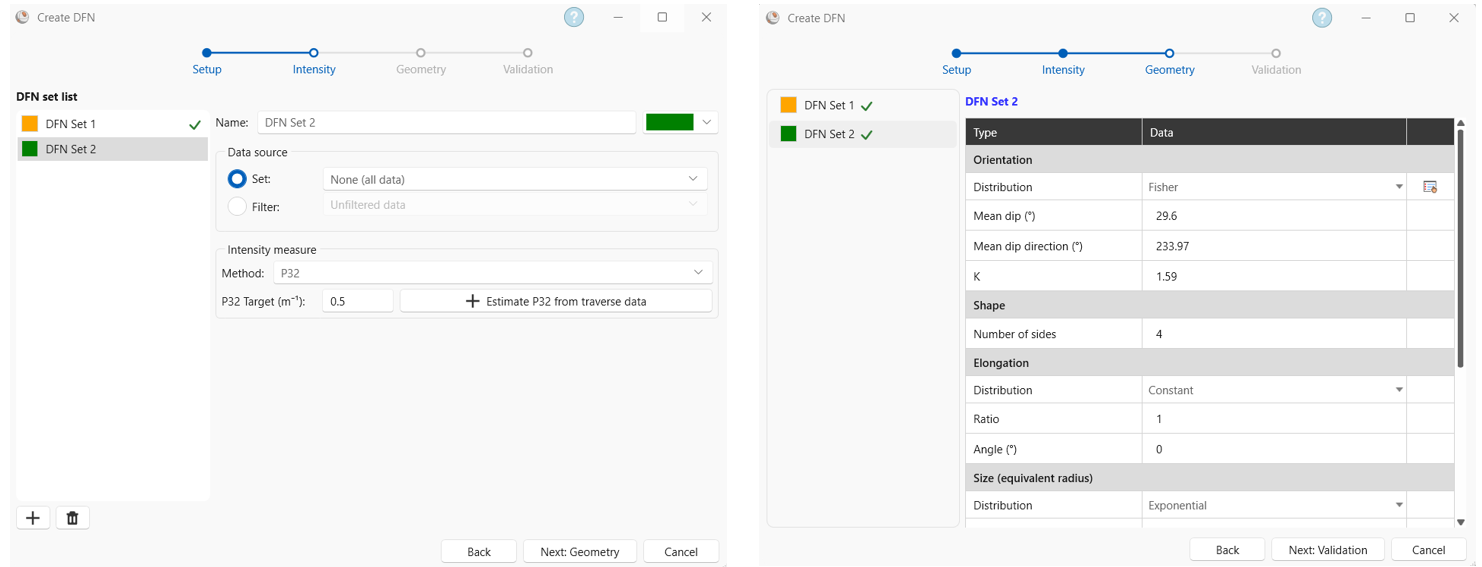
Figure 2. Streamlined DFN setup through the Create DFN wizard. - Rock Mass View: A new ‘View’ option in DIPS designed to display orientation data and DFNs in 3D. The Rock Mass View also allows you to edit DFNs and export them for use in other Rocscience applications.
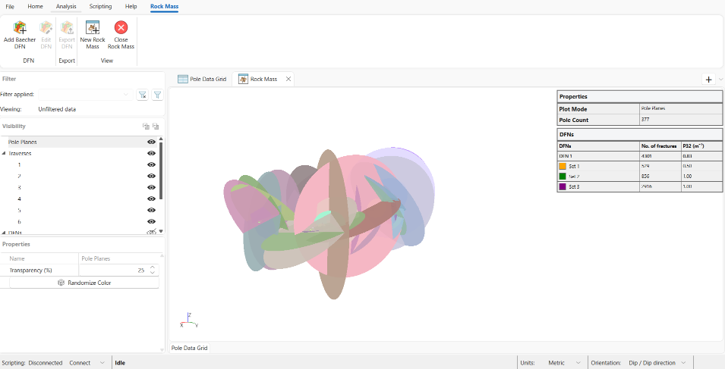
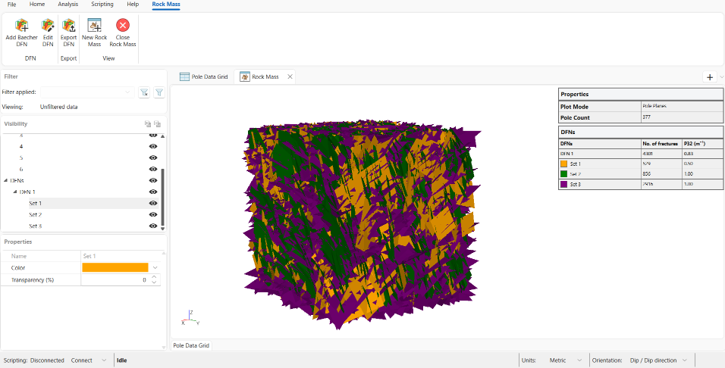
Figure 3. Rock Mass View interface showing the 3D visualization environment for discrete fracture networks.
Applicability of DFNs Across the Rocscience Ecosystem
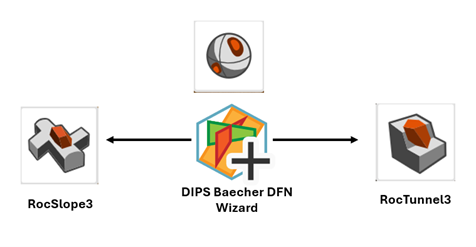
The Baecher DFN Wizard in DIPS is Rocscience’s first comprehensive 3D DFN modeller utilizing a Baecher spatial distribution model as well as various fracture intensity and geometry options. Its versatility and easy integration into the Rocscience ecosystem makes it valuable across multiple applications.
In mining applications, DFNs generated in DIPS can be used in RocSlope3 for detailed slope stability analyses and in RocTunnel3 for underground mine design. Civil engineering projects benefit from improved understanding of tunnel stability by integrating DFNs from DIPS with RocTunnel3.
Advancing Geotechnical Practice
The Baecher DFN Wizard represents a significant expansion of DIPS' analytical capabilities. By integrating three-dimensional stochastic fracture network modelling with traditional stereonet analysis, DIPS 9.004 provides a complete platform for discontinuity characterization that addresses both deterministic and probabilistic analysis needs. The feature transforms existing DIPS data into actionable three-dimensional models, enabling engineers and geologists to perform more detailed analyses.
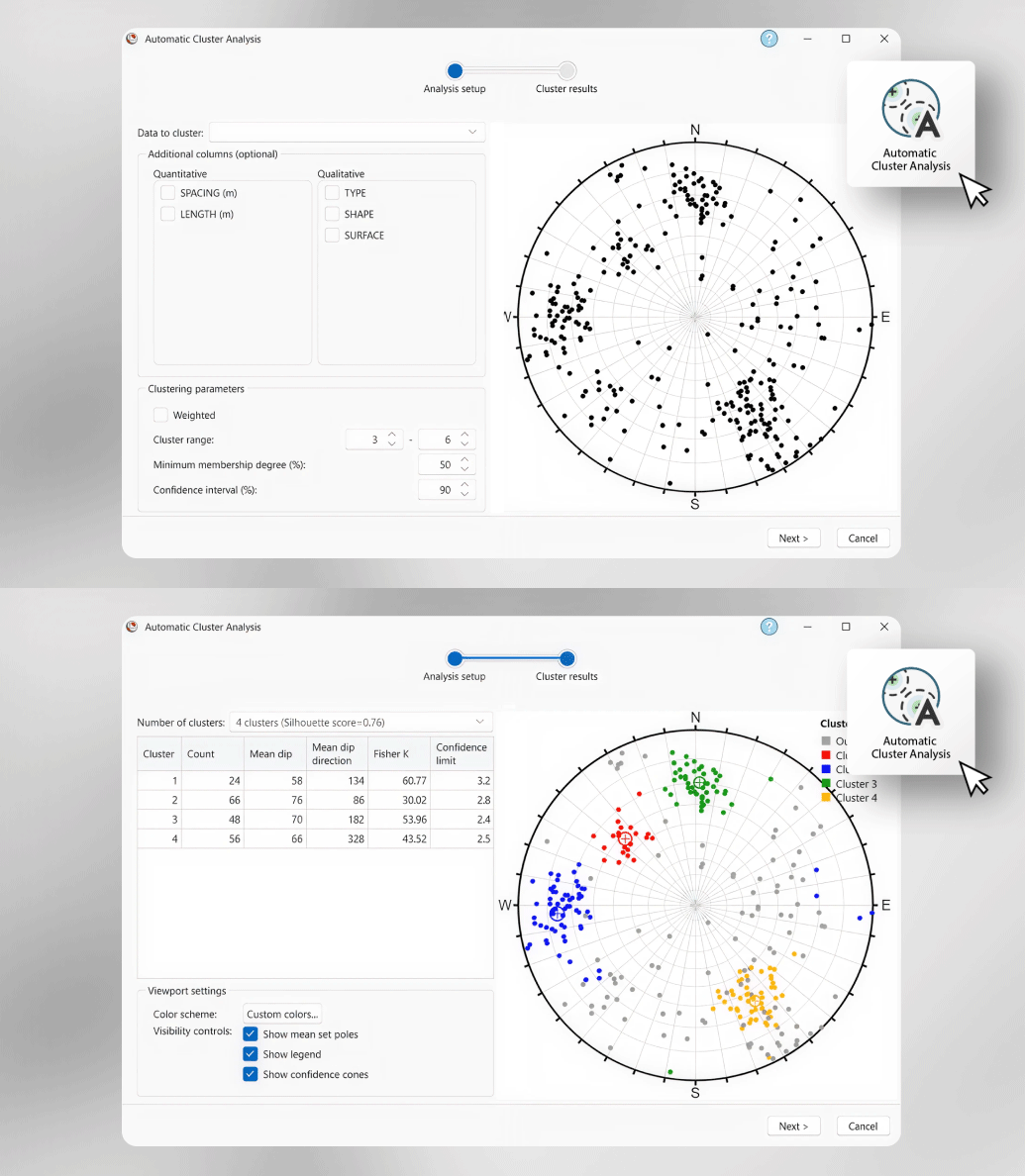
DIPS 9.004 also introduces Automatic Cluster Analysis, a machine learning-powered feature that tackles the earlier step in this workflow: identifying the discontinuity sets that the DFN is built from. This new feature makes setting up the inputs for DFN modelling more efficient and more consistent. Read the full article here.