Design with Manufacturer-Verified Reinforcement Data in Slide2
- Sina Javankhoshdel, Senior Manager - LEM at Rocscience
Engineering decisions are only as reliable as the data behind them. Yet for many engineers, incorporating geosynthetic reinforcement into a slope stability model still involves manually entering product properties and translating manufacturer specifications into design parameters before analysis can even begin.
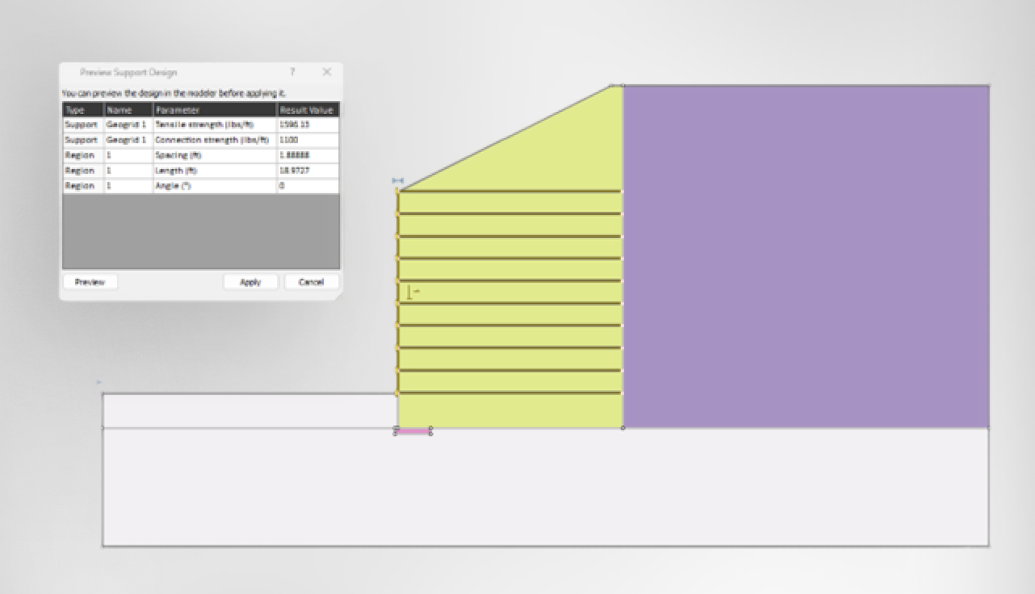
With Slide2's Manufacturer Library, that step is eliminated from the workflow. Engineers can select a product, and its manufacturer-provided properties apply automatically to the analysis – without the need for transcription, translation, or guesswork. The library's newest addition is Geoquest, bringing three geosynthetic reinforcement products directly into Slide2's steep slope, MSE wall, and embankment stability workflows.
Example Application: Embankment on Soft Clay Reinforced with Geoquest ArmaLynk Uniaxial 300
To demonstrate the value of the Geoquest integration, a representative embankment founded on soft clay was analyzed using Slide2.
The embankment was reinforced using Geoquest ArmaLynk Uniaxial 300, a high-strength polyester geogrid installed at the embankment-foundation interface. The reinforcement properties were taken directly from the Geoquest product specifications available through the Manufacturer Library.
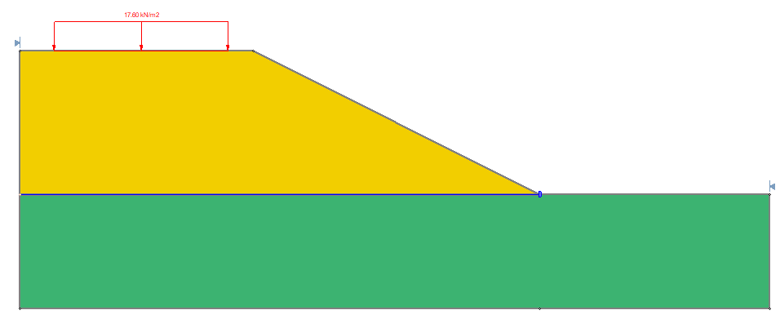


The objective was to evaluate how the reinforcement influences overall stability under both static and seismic loading conditions.
Static Loading Performance
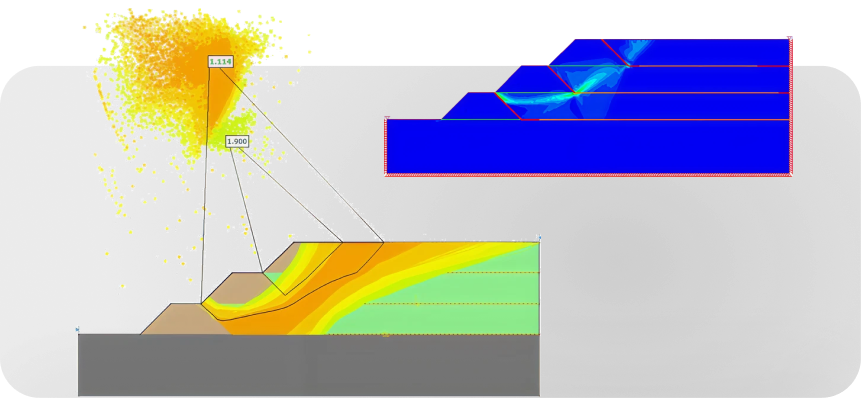
The unreinforced embankment produced a factor of safety of approximately 1.30.
After introducing the Geoquest ArmaLynk Uniaxial 300 reinforcement, the factor of safety increased to approximately 1.60, representing a significant improvement in overall stability.
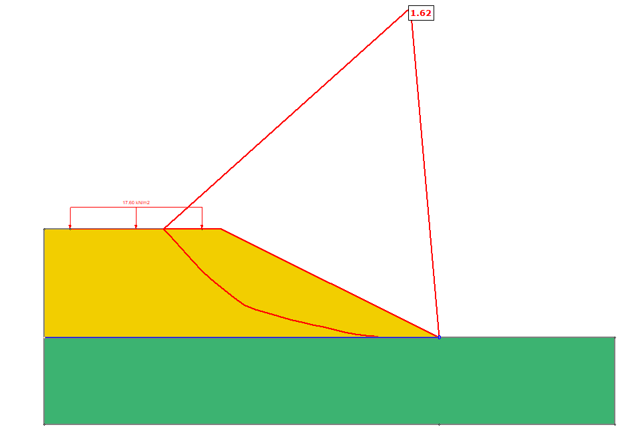
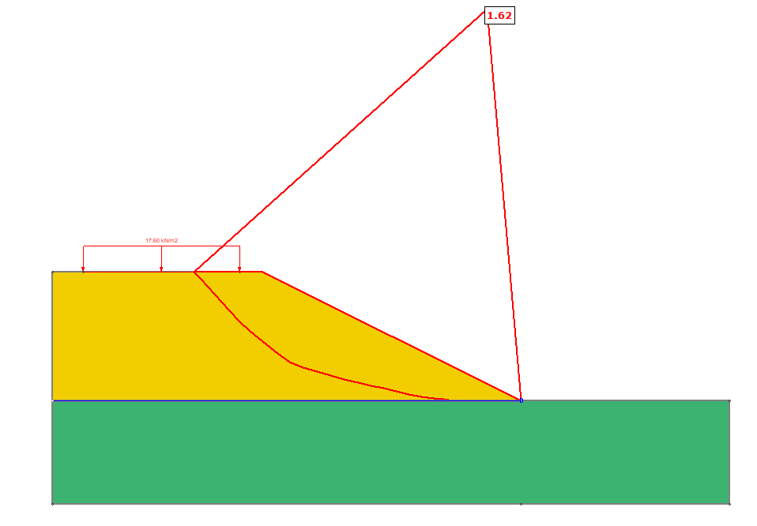
The results illustrate how basal reinforcement can provide additional resistance against rotational failure by mobilizing tensile forces along the reinforcement layer.
Seismic Loading Performance
The benefits of reinforcement became even more apparent under seismic loading conditions.
The unreinforced model produced factors of safety below 1.0, indicating unstable conditions. After introducing the Geoquest ArmaLynk Uniaxial 300 reinforcement, the embankment remained stable with a factor of safety greater than 1.0.
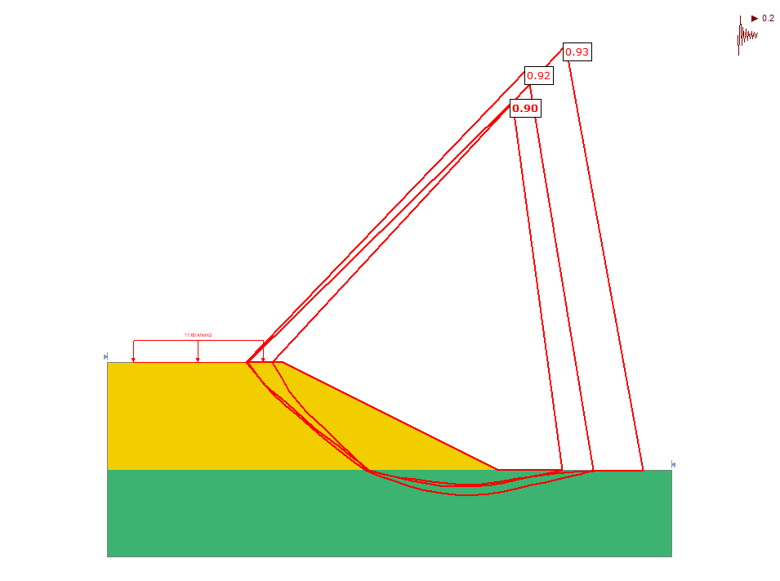
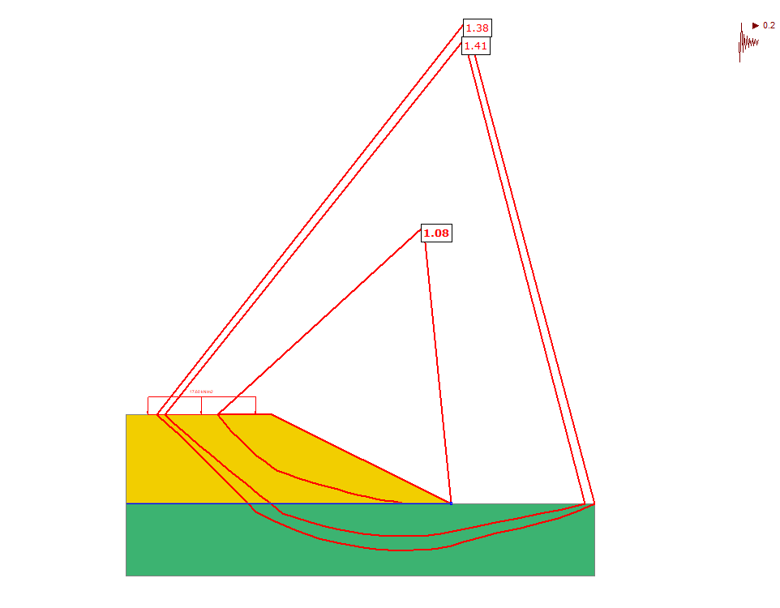
The reinforcement acts to restrain lateral spreading, improve rotational stability, and reduce the likelihood of foundation failure during loading events.
The Slide2 Manufacturer Library
The Slide2 Manufacturer Library gives engineers direct access to verified product data from a growing ecosystem of reinforcement manufacturers and support systems. Rather than manually defining support properties, users can select products directly within the software and apply manufacturer-provided engineering data to their analyses. This streamlines model setup, improves traceability, and helps ensure analyses reflect the materials specified for construction.
Today, the library includes geosynthetic reinforcement products from manufacturers such as Tensar, Maccaferri, TenCate, HUESKER, Naue, Strata Global, Synteen, Geomatrix, Geoquest, and others, alongside manufacturer libraries for soil nails and grouted tiebacks. Slide2 also supports user-defined manufacturer libraries, allowing organisations to standardize proprietary or preferred reinforcement products across projects while maintaining a consistent and transparent design workflow.
Geoquest Joins the Extensive Slide2 Roster
The latest release expands this ecosystem with the addition of Geoquest geosynthetic products, giving engineers even greater flexibility when selecting reinforcement solutions for embankments, steep slopes, and mechanically stabilized earth (MSE) walls.
Selecting a Geoquest product automatically applies its manufacturer-specific design properties to steep slope, MSE wall, and embankment stability analyses in a single step. This helps close the gap between product selection and engineering analysis, enabling designers to evaluate reinforced earth structures using real-world material data.
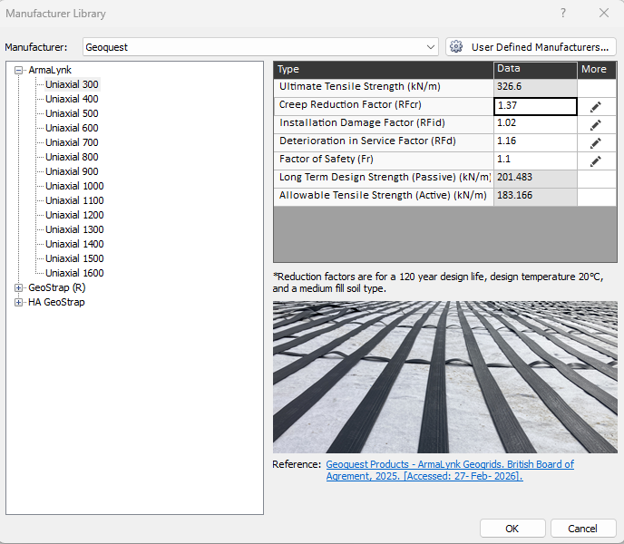
The Geoquest library currently includes:
- ArmaLynk® for basal reinforcement and embankment stability
- GeoStrap® as reinforcement for steep slopes and MSE walls
- HA GeoStrap® as reinforcement for steep slopes and MSE walls
Each product contains manufacturer-provided properties such as ultimate tensile strength, long-term design strength, creep reduction factors, installation damage factors, durability reduction factors, and allowable tensile strength. By incorporating these products directly into Slide2, engineers can quickly evaluate reinforcement alternatives using verified manufacturer data while maintaining a fully documented design workflow.
Why Geosynthetic Reinforcement Matters
Basal geosynthetic reinforcement with high-tensile-strength geogrid is a well-established method for improving the stability and constructability of embankments built on soft soils. During construction, soft cohesive foundations are vulnerable to:
- Deep-seated rotational instability
- Lateral spreading
- Foundation extrusion
Placing tensile reinforcement at the embankment-foundation interface adds stabilizing resistance that improves performance and raises the factor of safety. With real Geoquest products now modelled directly in Slide2, those benefits can be quantified using manufacturer data rather than estimated manually.
Benefits of the Geoquest Integration
The addition of Geoquest products to Slide2 provides several practical advantages.
- Faster Design Workflow
Select reinforcement products directly from the Manufacturer Library without manually entering material properties.
- Improved Design Confidence
Use manufacturer-specific design parameters rather than generic reinforcement assumptions.
- Efficient Product Evaluation
Compare multiple reinforcement options quickly to identify the most effective solution for a project.
- Better Documentation
Clearly document the reinforcement product used in the analysis, improving traceability and design transparency.
Available Now in Slide2
The Geoquest Manufacturer Library is now available in Slide2, providing engineers with direct access to industry-recognized geosynthetic reinforcement products for embankment design, soft-ground construction, and slope stabilization applications.
The integration of products such as ArmaLynk Uniaxial enables engineers to move seamlessly from product selection to stability analysis while leveraging the powerful limit equilibrium tools available in Slide2.
As engineering projects continue to demand greater efficiency, transparency, and technical rigor, access to reliable material data becomes increasingly important. By bringing Geoquest products directly into the Slide2 workflow, Rocscience enables engineers to evaluate reinforcement alternatives using manufacturer-verified data, maintain a fully documented design process, and make more informed decisions with confidence.
Design Reinforced Earth Structures with Greater Confidence
See how the Slide2 Manufacturer Library helps streamline reinforced embankment, slope, and MSE wall analyses.
Star Your Free Trial