Beyond the Key Block: Combined Block Analysis for Excavation Design in RocTunnel3
- Beverly Yang, Geomechanics Specialist at Rocscience
Underground excavations are built one stage at a time, and every excavation stage changes the stability of the surrounding rock mass. As the excavation progresses, new blocks are formed and exposed, existing blocks become removable, and neighbouring blocks can interact to form larger failure mechanisms that may not have been identified at earlier stages. Designing effective support therefore depends not only on understanding individual blocks, but also on anticipating how blocks influence each other throughout excavation.
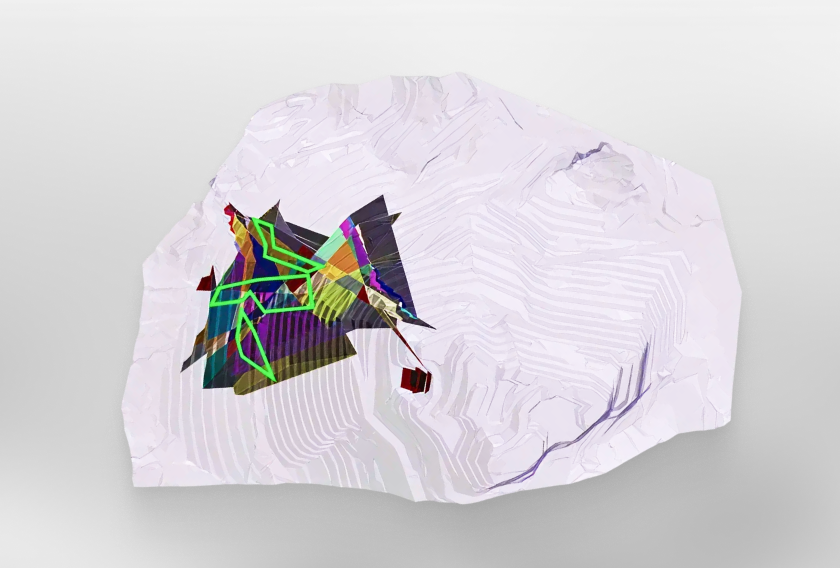
The upcoming release of RocTunnel3 introduces Combined Block Analysis, extending Rocscience's advanced 3D limit equilibrium workflow beyond traditional Key Block Identification and Successive Failure Analysis to identify the largest removable block formed by multiple connected individual blocks, referred to as unit blocks. Integrated directly with staged excavation modelling, the new capability enables engineers to evaluate complex block failures throughout planned excavation sequences, supporting more informed excavation planning, refined stabilization strategies, and greater confidence in underground design.
The Need for Combined Block Analysis
Successive Failure Analysis has long helped engineers identify key blocks and evaluate potential instability in jointed rock masses. While this remains fundamental to underground design, rock masses rarely fail as neatly defined, isolated blocks. Networks of discontinuities create complex structural systems where individual blocks may not be removable on their own, but a combination of neighbouring unit blocks may be removable as a larger system.
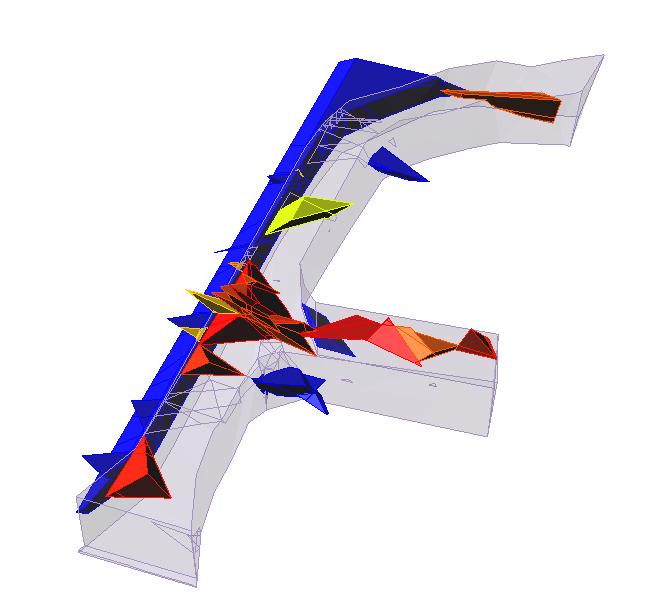
Combined Block Analysis addresses this challenge by evaluating combinations of blocks instead of considering each block independently. As a result, the analysis identifies the largest removable block cluster (i.e., a combined block) for each sliding direction, providing a more representative assessment of potential failure volumes and instability mechanisms.
While Successive Failure Analysis iteratively removes unstable blocks to reveal additional key blocks, Combined Block Analysis provides a complementary perspective by identifying the largest removable cluster that can form when multiple connected unit blocks behave as a single failure system. Together, these capabilities allow engineers to evaluate both individual block failures and larger interconnected failure mechanisms within the same 3D model.
Supporting Better Decisions Throughout Sequential Excavation
One of RocTunnel3's defining strengths is its ability to model staged excavation.
Unlike slopes, underground excavations are constructed sequentially. Tunnels, caverns, shafts, and other underground openings evolve with every excavation stage, exposing new rock surfaces and changing the geometry of potential block failures. As excavation advances, neighbouring blocks may become interconnected into larger removable clusters that were not present during earlier stages.
Support design must evolve alongside these changing conditions.
Combined Block Analysis enables engineers to evaluate these evolving block systems throughout the planned excavation sequence. By identifying critical removable block clusters, engineers can better understand where instability may develop, assess the potential extent of failure, and determine whether planned support measures remain appropriate as excavation progresses.
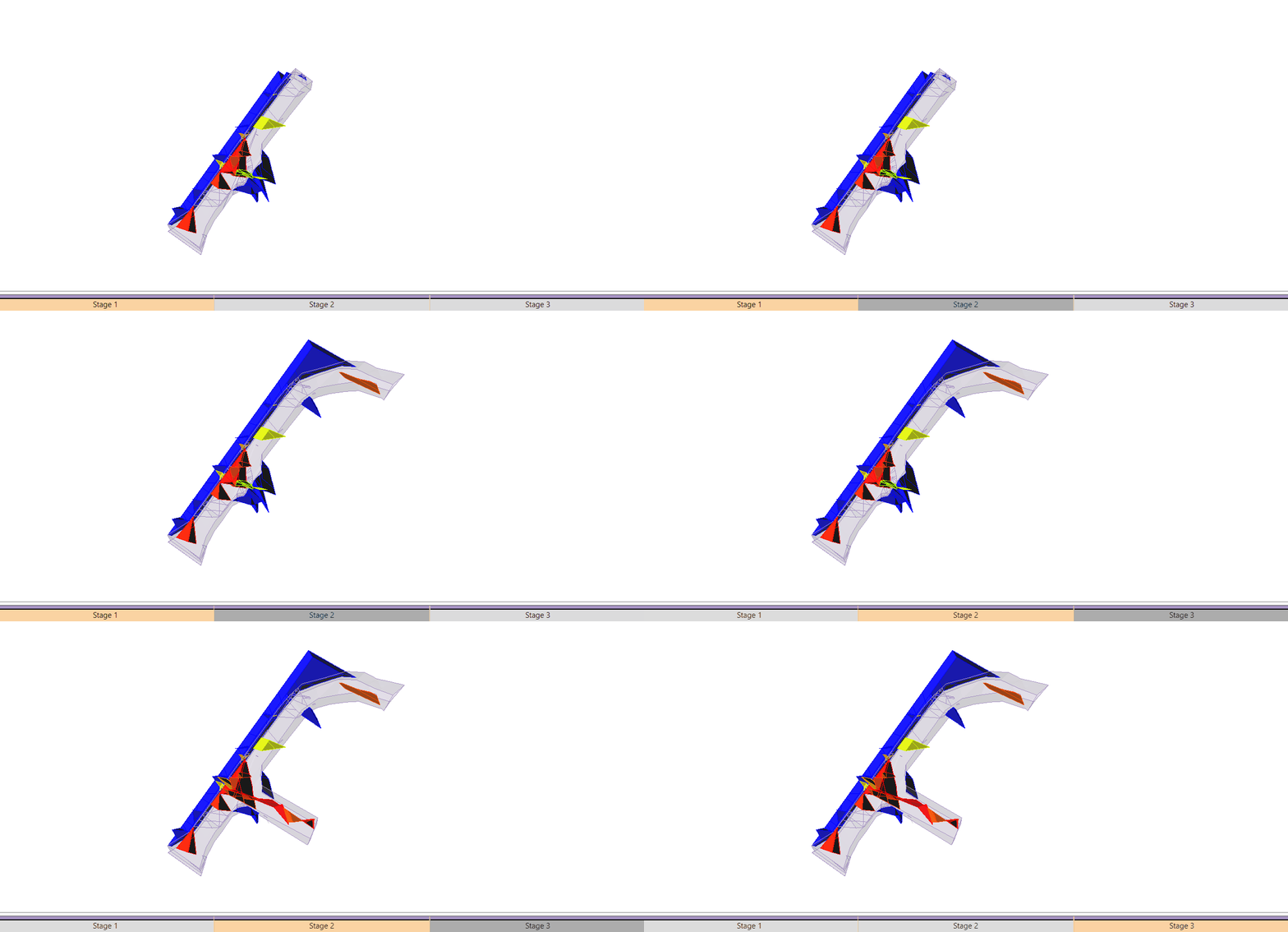
With Combined Block Analysis, engineers can anticipate more complex failure mechanisms during design, allowing them to optimize excavation sequences, refine reinforcement strategies, and allocate support where it will have the greatest impact. Combined with Successive Failure Analysis, the capability provides a more complete understanding of underground stability by revealing both local block failures and larger interconnected failure mechanisms before excavation reaches those areas.
A Familiar Workflow with Expanded Insight
Combined Block Analysis integrates directly into RocTunnel3's existing block analysis workflow.
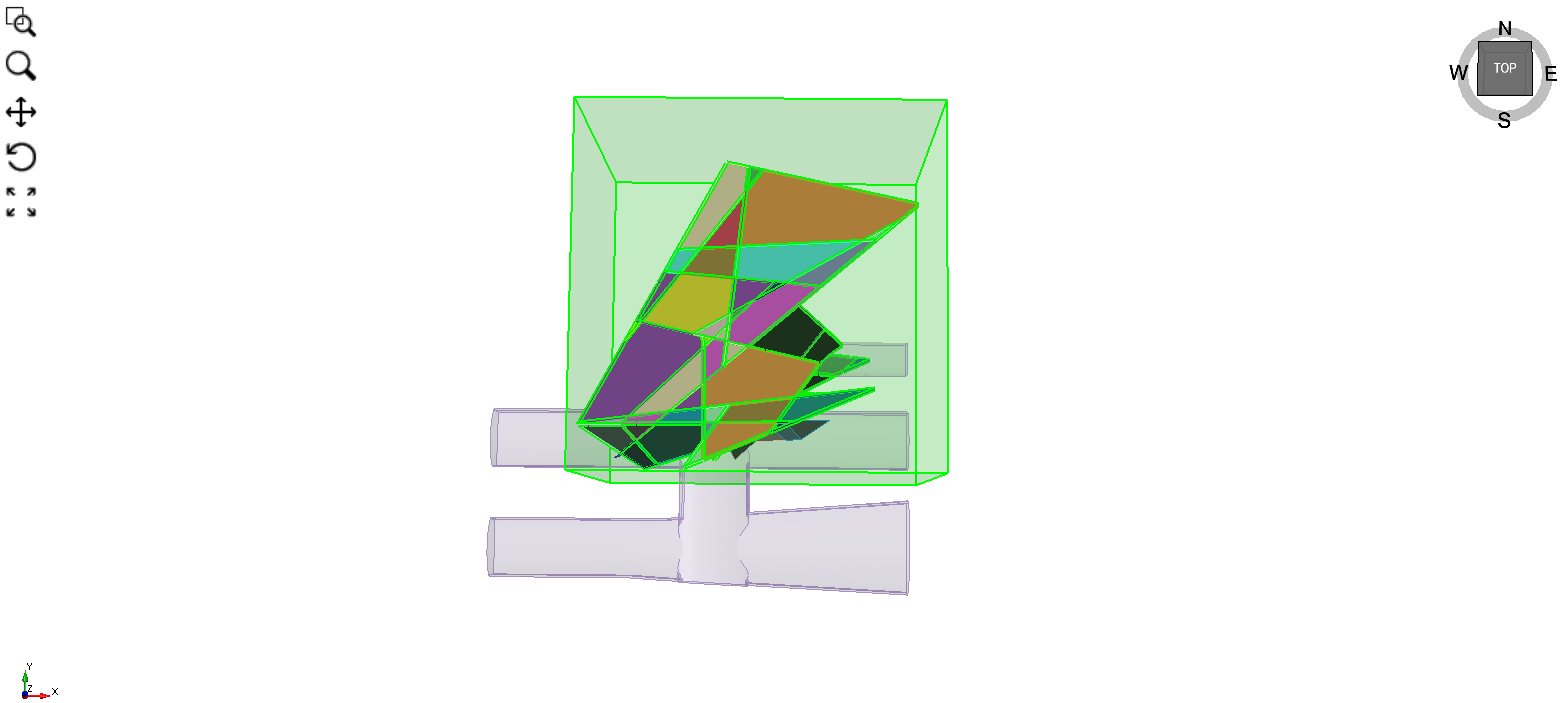
Engineers begin by computing joint traces and joint intersections to identify potential block formation and daylighting regions within the excavation. Kinematic analysis then determines the factor of safety of removable unit blocks and identifies key blocks. When Combined Block Analysis is performed, the kinematic analysis also identifies the largest removable combined block from the available unit blocks for each sliding direction.
Search Limit Boxes can be placed around regions of interest to focus computations and reduce analysis time, particularly for large underground models with complex discontinuity networks.
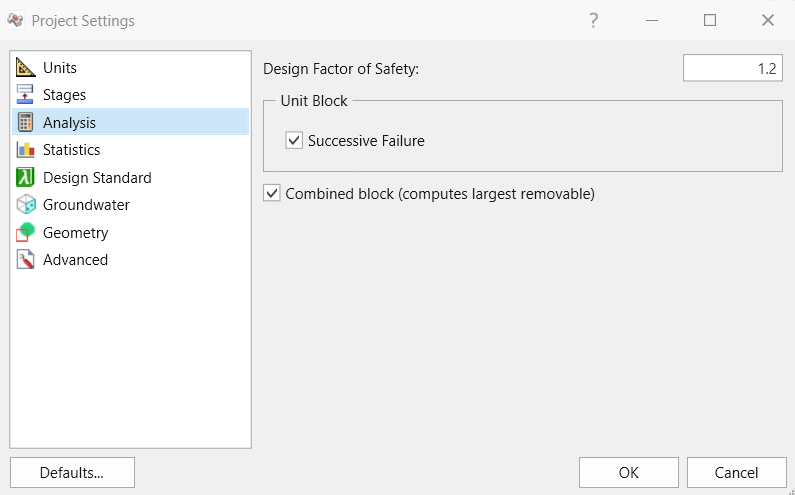
Once the relevant search regions have been defined, Combined Block Analysis can be enabled in the Project Settings and the model recomputed. Because the capability builds upon RocTunnel3's established block analysis workflow, engineers can incorporate combined block assessment into existing modelling practices without introducing a separate analysis process.
Results are presented within an integrated environment where engineers can evaluate unit blocks alongside combined blocks, making it easier to relate local instabilities to larger interconnected failure mechanisms. Separate result sets allow detailed investigation of different block types, providing a clearer understanding of failure geometry and the structural relationships that govern excavation stability.
Refining the Analysis with Combined Block Search Filters
The largest removable block cluster provides an important measure of potential failure volume, but it does not always correspond to the lowest factor of safety or highest required support pressure. Combined Block Search Filters allow engineers to refine the analysis using practical design criteria, such as maximum failure depth, focusing the results on the block clusters most relevant to project-specific design objectives.
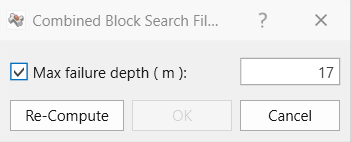
Applying these filters enables engineers to isolate combined blocks that are most critical to stability and focus stabilization measures on the failure mechanisms most relevant to the excavation design. This supports more targeted and efficient support strategies while helping engineers distinguish between the largest potential failure volume and the failure mechanisms that may be most critical to the design.
A More Complete View of Underground Stability
Combined Block Analysis extends RocTunnel3 beyond traditional key block assessment by enabling engineers to evaluate how interconnected unit blocks can behave together as larger removable systems. When combined with staged excavation modelling, RocTunnel3 provides a more complete representation of how block instability can evolve throughout sequential excavation. This enables engineers to identify larger potential failure mechanisms, optimize excavation sequences, and refine support strategies before excavation reaches critical areas.
By understanding not only where individual blocks may fail, but also how neighbouring blocks interact as excavation progresses, engineers can make more informed decisions about excavation and support design. This broader view of block behaviour provides greater confidence in 3D underground excavation design, particularly where complex discontinuity networks create failure mechanisms that cannot be adequately represented by individual blocks alone.
Combined Block Analysis in RocTunnel3 will be released in September 2026, continuing Rocscience’s commitment to advancing 3D limit equilibrium methods.
Take a More Complete View of Underground Stability
Use RocTunnel3 to evaluate evolving block behaviour and develop more informed excavation and support strategies.
Try RocTunnel3 For Free