Slope Stability Analysis using LEM & FEM
About the Course
Discover practical approaches to 2D slope stability analysis in this two-day, instructor-led course using Slide2 for limit-equilibrium methods (LEM) and RS2 for finite-element shear strength reduction (FEM-SSR) analysis.
Through hands-on tutorials and real-world case studies, you will compare LEM and FEM results and learn how to apply engineering judgement when selecting an appropriate analysis approach.
Explore key topics including failure mechanisms, material behaviour, groundwater and seepage conditions, and drained, undrained, and coupled analyses. The course also includes a brief introduction to 3D slope stability analysis with Slide3 and RS3.
Course Details
- Date: October 19th-20th, 2026
- Venue: Rocscience HQ | 18 King St. East, Suite 1700, Toronto, Ontario M5C 1C4
- Time: 8:30am - 5:00 pm
- Instructor: This course will be in English, instructed by Dr. Alireza Azami
- Programs Covered: Slide2, Slide3, RS2, RS3
- Registration Fees:
Early Bird - $1,250 USD (until September 15th,2026)
Regular - $1,500 USD
What’s included:
- Temporary software licenses
- PDF of course materials
- PDH Certificate
- Lunch & Snacks
Please note:
- Registrants will be responsible for their own accommodation
- Participants must bring their own laptops (and mice)
- Recommended minimum specs:
- 32 GB RAM is the recommended minimum
- 64 GB RAM for 100,000+ triangles
- 100 GB SSD is the recommended minimum
- 500 GB SSD preferred
- Discrete Nvidia brand graphics cards preferred for optimal experience
- Windows 10 64-bit recommended minimum
For any additional queries, please reach out to avi.tharmalingam@rocscience.com
Rocscience Networking Social
Please join us on the evening of October 19th from 5:00 PM to 7:00 PM for the Rocscience Networking Social. This special gathering offers an opportunity for course participants to meet and connect with industry leaders, researchers, and potential partners in a relaxed and friendly setting. Enjoy informal conversations, share insights from the day’s sessions, and build meaningful professional relationships.
Course Outline
Module I: Introduction to Stability Analysis
- Failure modes of soil and rock slopes
- Methods of analysis – Limit Equilibrium Methods and Finite Element Method
Module II: Overview of Limit-Equilibrium Slope Stability Analysis (Slide2)
- 2D limit-equilibrium method of slices
- Choice of methods
- Slide2 – general overview
- Model creation, and interpretation of results (with hands-on practice)
- Material shear strength criteria
- Search methods for locating minimum factor of safety and failure surface optimization techniques
- Material behavior models (anisotropic vs. isotropic material models)
Module III: Slope Stability Analysis Using FEM-SSR (RS2)
- An introduction to FEM and RS2
- Geometry and model creation
- Project settings and options
- Meshing
- Loading and boundary conditions
- Computing and interpreting results
- Shear Strength Reduction approach
- Advantages and disadvantages of FEM and how FEM can complement LEM Integration with Slide2
Module IV: Seepage and Groundwater Analyses
- Pore water pressures and slope stability
- Phreatic surface, grid, and pore water pressure ratio methods
- Steady-state seepage analysis
- Transient seepage analysis
Module V: Case Studies – 1-to-1 LEM and FEM Comparison
- Levee
- Tailings dam
- Open-pit mine
- Mine waste dump
- Verification and comparison of LEM and FEM-SSR results
- Judgement of analysis outputs for reasonableness and applicability of the analysis method
Module VI: Touch of 3D – Why 2D and 3D Analyses
- 2D and 3D limit-equilibrium methods
- Why 2D and 3D analyses and comparison of 2D and 3D results
- Comparing 2D and 3D slope stability problem
- Integration and Workflow
Wrap-Up – Q&A and Best Practices
- Open Q&A and discussion of participant-specific problems
- Common modelling pitfalls and quality-control checks
- How these tools connect with the rest of the Rocscience suite
- Course feedback and recommended next steps
Course Instructor
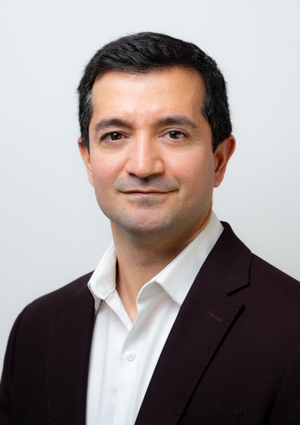
Dr. Alireza Azami is a Geomechanics Specialist and the Director of Research at Rocscience, where he has been a key contributor since 2010. He holds a Ph.D. in Civil Engineering (Geomechanics) from McMaster University, with a research focus on constitutive modelling of geomaterials.
Over his tenure at Rocscience, Dr. Azami has led research and development efforts across several flagship software products, including Slide2, Slide3, RS2, RS3, and RSData. His expertise spans seepage and coupled hydro-mechanical analysis, advanced constitutive modelling for soil and rock materials, and implementation of the shear strength reduction method for a wide range of material models within Rocscience FEM tools.
Beyond software development, Dr. Azami is actively involved in knowledge transfer and industry training. He regularly delivers workshops, webinars, and both standard and fully customized courses to engineering professionals worldwide. He is also engaged in collaborative research programs and serves as an Adjunct Professor in the Department of Civil & Mineral Engineering at the University of Toronto.
Oct 19, 2026 - Oct 20, 2026
Toronto, Canada
The course will be conducted in English
- Early Bird: USD $1250
(until Sept 15, 2026) - Regular: USD $1500